
A Treasury of Tyneside Tales

Our Heritage Lead, David Silk, goes in-depth on this large-scale project, exploring folklore, Crankie theatres and community stories...

When we think about treasure, particularly in the context of a museum, we’re almost certainly thinking about stuff. Torcs of twisted bronze or gold wire that adorned the necks or arms of long dead chiefs; beads of amber or shining coloured
glass; beautifully worked metal that once adorned arms and armour; hordes of coins, gold or silver, deposited in the ground in the vain hope that the owner could one day retrieve them. Or maybe we sometimes think of rarer ‘treasures’ that are not made of precious metals or rare materials, but something that nonetheless feels valuable and fragile, like the Vindolanda tablets – tiny slivers of wood that preserve the handwriting and daily lives of the people of Roman Britain – a glimpse into the minds of our predecessors. I don’t think too many people would now argue that this too is a kind of treasure.
While the Great North Museum’s Treasures exhibition explored this kind of treasure, painstakingly excavated by generations of antiquarians and archaeologists, a Treasury of Tyneside Tales wanted to look at another less substantial kind of treasure. Stories.
More specifically folk stories or folklore, a treasure similar in many ways to the Vindolanda Tablets in that it preserves the thoughts, feelings and the details of the daily lives of the people who have lived in the region before us. But this treasure is impossibly fragile, most of it irretrievably lost except for a few gems unearthed and preserved by folklorists. As with the physical treasures examined by archaeologists, the accuracy and meaning of what has come down to us is always open for debate. But what I think it does reveal is that the folks who lived in this region before us, as with most lands, lived in a magical world.
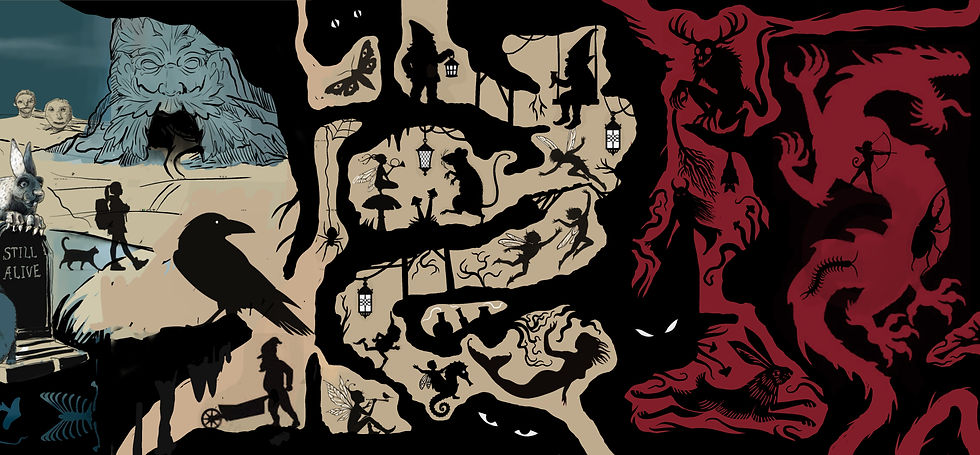
They peopled the familiar landscape of their home with supernatural beings, benign and harmful in equal measure; they created a system of ritual, spells and charms to engage with this supernatural world and to allow themselves to navigate it safely (carrying sprigs of Rowan to ward off evil); and they created an imagined history for the land in which witches, giants and legendary heroes turned to stone, built vast causeways and slew wyrms that slept coiled round hills.
These stories and legends have fascinated me since I can remember. Something gripped me about myths and legends, first Greek mythology, then Norse, Irish and Welsh, and then stories from closer to home. When I studied history at University I remained fascinated by the stories, legends and literature that people leave behind them. I felt these tales, whether or not they were ‘true’ in the historical sense, allowed us to get into the minds of the people who lived in the past and understand how they saw and felt the world they lived in. A place shaped by magic, lore and superhuman powers.
What really excited me at the beginning of the project was the idea that it could combine the ancient legends and folk traditions of the North East with the stories of people living in the region today – connecting those two traditions and carrying them into the future. The fact that it was also going to involve building a giant crankie was the cherry on top – these storytelling machines were extremely popular in Victorian times before the advent of the moving picture, but today are a fairly niche part of traditional storytelling culture, particularly in America. No one had attempted to build anything on this scale in the UK for a long, long time, so we were also going to see the restoration of a unique storytelling tradition. Something about the crankie also appealed in how analogue and mechanical it is – in a time when digital media is increasingly dominant, sometimes damagingly so, it was a refreshing idea that the project would involve not only the creation and preservation of very human stories, but that it would be done through hands on art, puppetry and mechanics made the whole thing feel surprisingly modern, when we look at the backlash against AI and the dominance of algorithms which is starting to filter into cultural discourse.
Researching the folklore for the project in the Great North Museum meant a great opportunity to delve into the library of the Society of Antiquaries of Newcastle, the oldest provincial antiquarian society in the country that has operated since 1812. The library is a free resource, open to anyone who goes in during the opening hours and is a treasure trove of both really old tomes and up to date scholarship…but I admit, it was the dusty old tomes I was there for.
A great find that turned up during my search was the story of the Giant of Corbridge (Cor himself). This is one of those folktales or characters that seem to have largely vanished from popular memory. Whereas the Lambton Worm and other monsters of legend have stuck around, Cor has been almost completely forgotten. Nonetheless, references in the archives show he must once have been very well known, as when in the 1660s huge bones were revealed by the slipping of the river banks after heavy rain, the locals were in no doubt that these must be the bones of the fabled giant Cor who had once lived in these parts. His bones (which if we’re going to be modern and scientific about it, were more probably the bones of some large prehistoric creature like a mammoth), were sent to Keswick to be displayed in Peter Crosthwaite’s “cabinet of curiosities”. Where old Cor is now resting is a mystery, but it might be worth someone’s time to pop over to Keswick museum to see if anything lies in their stores that might be identified as the old giant.
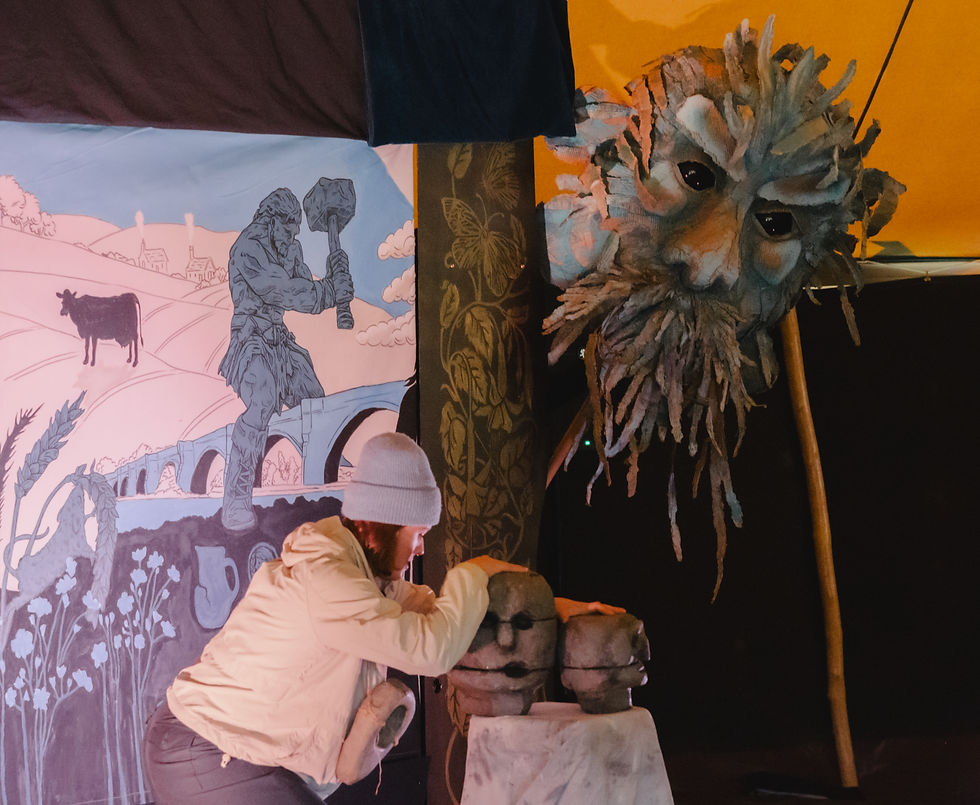
Further digging turned up more on Cor – Henry VIIIs antiquary Leland had said that he was fabled by the locals to be have been a “Yotun”, a Norse word still used in the 1500s to describe mythic giants, and he was believed to have built the Roman Road now more generally known as the Devil’s Causeway – the association between ancient giants and the Devil is a common one in folklore, sad in some ways as unique local characters get flattened and reimagined as the one Evil One responsible for all big building projects that people observed in their local landscapes. According to notes in one book, Cor roamed the whole of the River Tyne, and was responsible for hurling the Black Middens out into Tynemouth harbour to disrupt shipping. Whether this was down to a general
(and typically giant-ish) dislike for human beings and their comfort, or some dispute with Neptune the god of the seas is not recorded. Nonetheless, it opens up some interesting ideas about how old the legends of Cor might be – are we seeing here the remnants of an ancient belief of the giant or God of the river itself? If so, it’s very appropriate that the “part” of Cor in the final performance was played by Judith Hope’s magnificent River God Tyne puppet from a previous year’s Puppet Festival!
His story was a natural one to choose as one of the folktales to share with the participants while they were coming up with the stories for their own crankies. His connection with the landscape of Tyneside, and the idea that the features we see in the land can be connected with these legendary characters, made him pretty totemic for a project about “Tyneside Tales”.
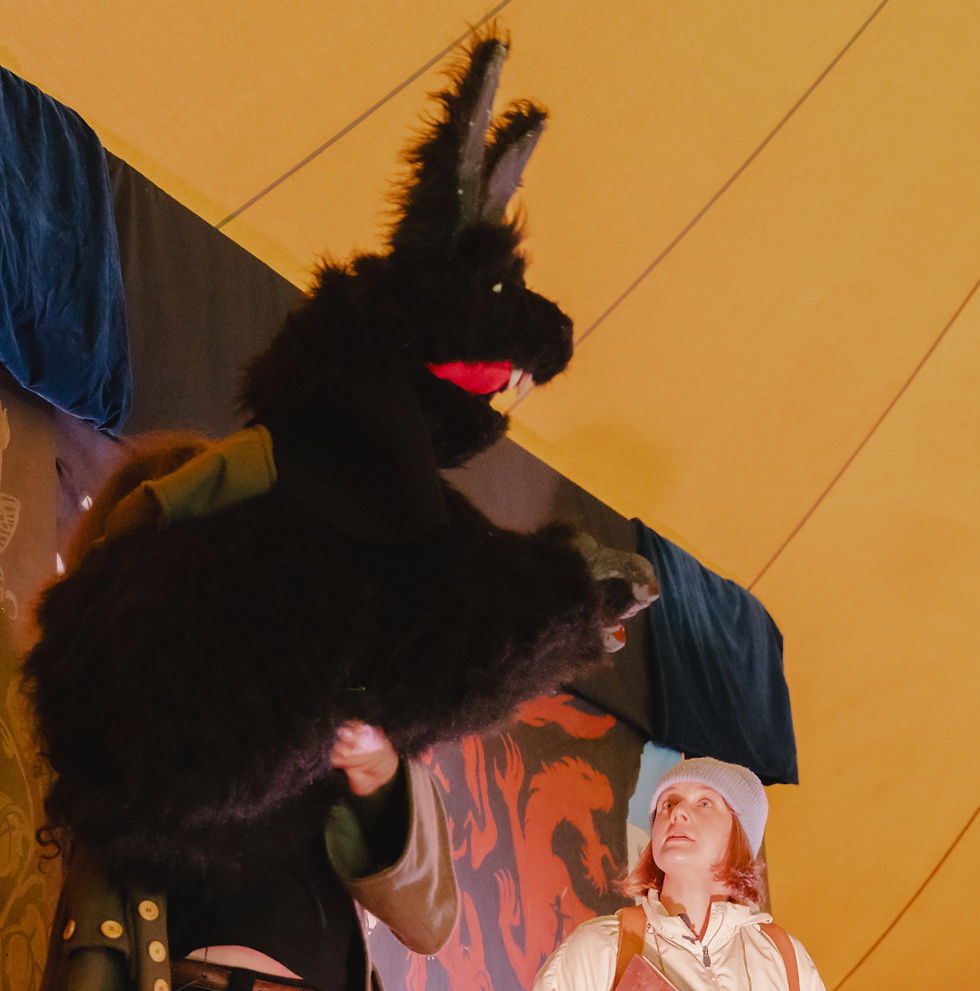
The Vampire Rabbit (sorry, Hare), also popped up, as he often does, unexpectedly. He's a great bit of mysterious urban folklore. For the same reason, I wanted to bring in the Hexham Heads, a bizarre bit of modern mystery dating to the 1970s and the finding of a pair of supposedly haunted Celtic stone heads in a suburban garden which led to the finders being menaced by a werewolf. The whole thing has the atmosphere of the beginning of a young adult novel, and the fact that it is relatively recent meant there were sources like newspaper reports, a BBC report and the Society of Antiquaries of Newcastle’s own archaeological sketches of the heads themselves, drawn when they examined them. Watching some of the younger participants realise that they were about the same age as the boy in the photos holding up these mysterious ‘cursed’ objects I was struck me during our archive sessions, and brought things into the modern world a bit more.
The other complete story that I shared with the participants was the story of Johnny Reed’s Cat, which is in a collection of English folktales collected by Charles Tibbits in the 1800s, and which was said to take place “Newcastle way” in a village nearby. It’s a variant of a well-known story across Europe, but this version is particularly nice – it’s written in standard English, but it’s pretty obvious from the way it’s written that Johnny Reed, the name of the grave digger who is the main character, is meant to rhyme with “dead” – and whereas but Tyneside can you rhyme dead with Reed? It gives it a sense of authenticity (even, I hope, in my version where I change a couple of the names of cats, though not of course, of Johnny Reed himself). It’s an excellent story that works for audiences of all ages; eerie and uncanny without being frightening; magical, but with enough realistic details that it remains somewhat believable – particularly if you have cats of your own and are therefore aware that they are definitely up to something. The participants enjoyed the tale, and it was great to see Old Tom, Johnny Reed’s cat, turn up in the Last Believer as such a key character, portrayed by another of Judith Hope’s gorgeously lifelike puppets.
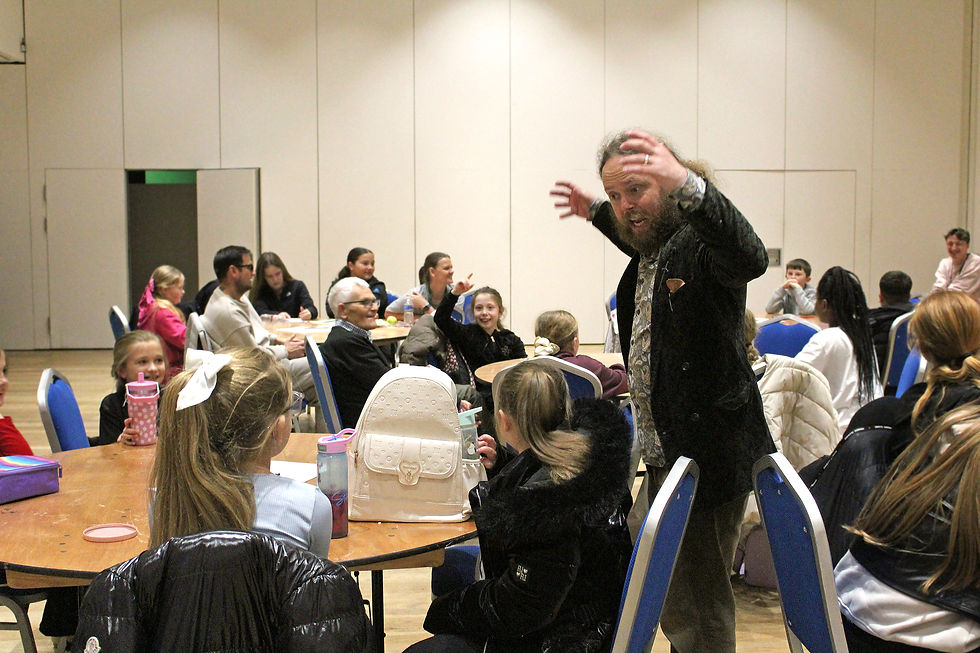
The real joy of any project like this isn’t the research though, it’s working with the participants on their own tales. This was such a varied cohort of different groups as well that we got an amazing variety of different stories and experiences being brought to bear. For every session we had Becca, the librarian at the Great North Museum’s library, showing them round the archives. As a massive history nerd, I absolutely loved seeing the care that they treated these really precious books with as well as watching them pore over them with their magnifying glasses, looking at treasures like Joseph Crawhall’s hand-coloured woodcut illustrations for local songs and tales like the macabre tale of the Long Pack (which as one participant pointed out to me, is like an early true crime story). There was a great moment of realisation as well, in one of the smaller and less spectacular books, when one young person realised that fairies weren’t only from books of fiction, but were things that people had once firmly believed in – a tale collected in the 20th century told someone’s own tale of being pursued by fairies, as well as a story of how the shop next door was owned by a Warlock. We had stories from the young people themselves of creepy places that were to be avoided, but alas, no fairies or warlocks.
When they got down to creating their own stories, a working a bit of folkloric magic into them with Jonluke’s help, they really got the assignment. Most needed very little prompting for great stories to come pouring out, funny, heartwarming and everything in between. One of my favourites was a boy who told a story of how he went downstairs to investigate a mysterious noise in his house that woke him up in the night. When he reached the top of the stairs, he knew that a monster had got into the house because he could see its red eyes glaring up at him from the bottom of the stairs. But it didn’t move towards him, so he got his courage up and went downstairs to confront it – and it was his dad’s bike. He’d forgotten to the turn the lights off.
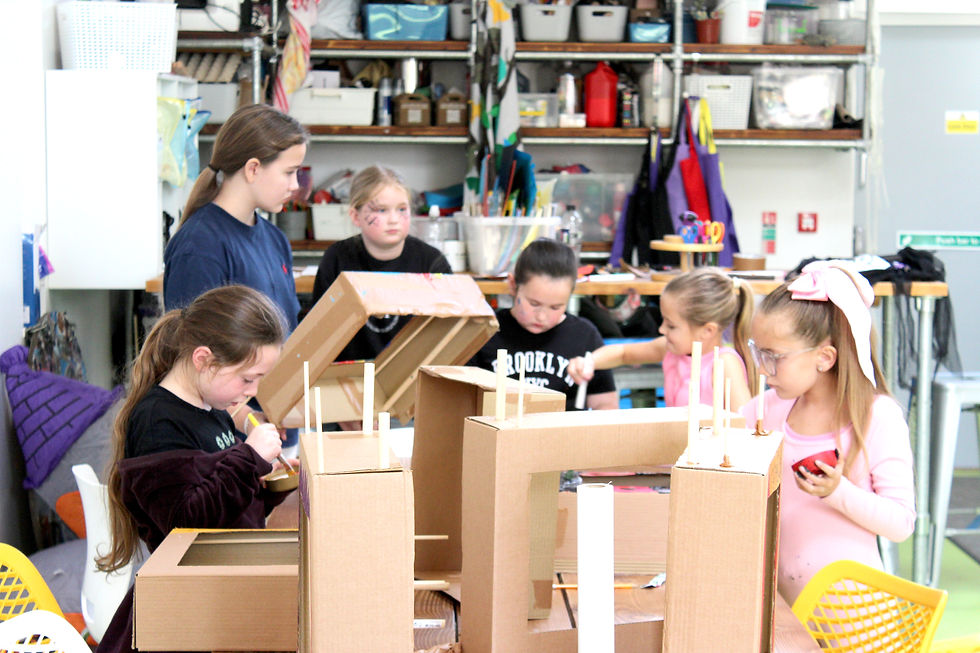
Even participants who struggled a little at first, I think realised that they had some great stories to tell. I had a conversation with one participant who said they didn’t have any interesting stories about their life, before starting a conversation about their three-legged dog who broke into every cupboard in the house to steal butter! With Jonluke’s skills as an illustrator and an artist these stories all came really vividly to life. It was an astonishing sight to see 100 crankies on the wall of the Great North Museum at the exhibition opening and to know that behind each one was a unique story of a life on Tyneside – and that there are hundreds of thousands more out there!
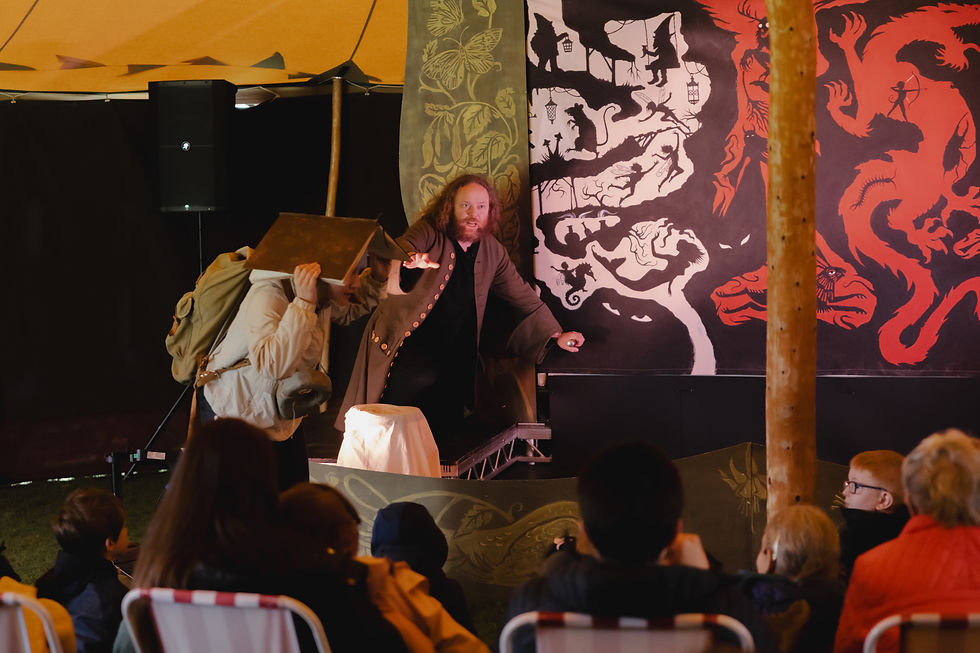
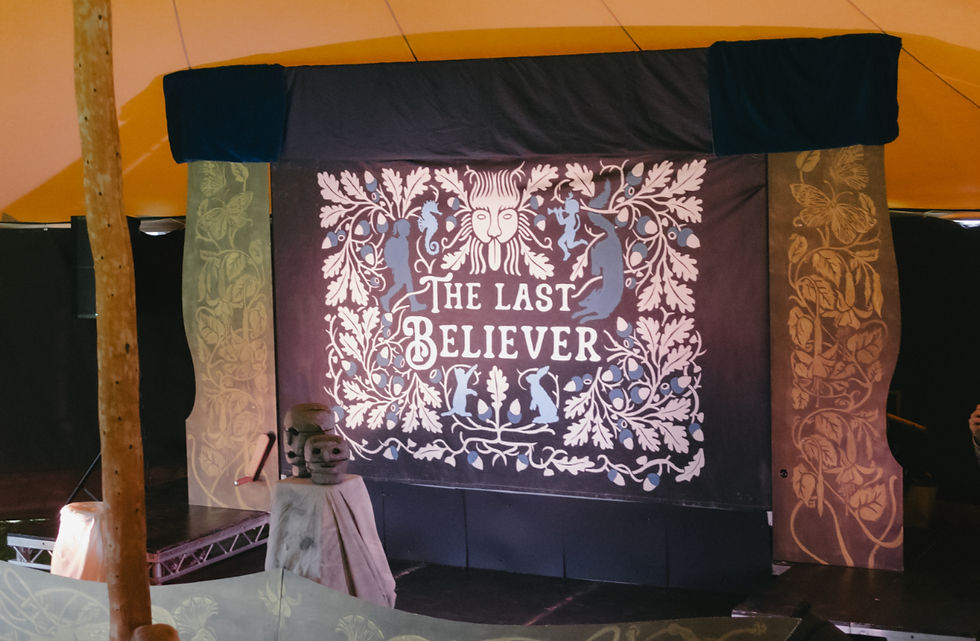
Of course, working with the participants to produce their own stories and their own crankies was part of the job, the other one was the performance with the giant crankie over the Easter holidays, and that was a bit more nerve wracking from my point of view. I’ve worked as a heritage lead on projects before, I’m a historian and folklorist and I’ve performed in front of people as a professional storyteller for more than 15 years now – but I’d never ‘acted’. I definitely came to storytelling first as a historian and developed my performance style myself, rather than doing what some do and coming at it from the drama side of things. So the idea of having to actually learn a script and get it right in front of an audience with other performers relying on me getting it right? Yes, nerve wracking is right. Danielle’s script was great though, and drew on the same folklore that had been shared with the project participants, weaving together Old Tom the King of Cats, Cor the Giant, the Hexham Heads and their mysterious wolf, the Hedley Kow and any number of other references into a fantasy story of hanging onto your wonder in the face of a world that seems designed to extinguish it.
And the Crankie itself? What an incredible machine! I could feel excitement replacing nerves as soon as I saw it and the fantastic handpainted artwork by Karis. The whole thing was an absolute work of art.
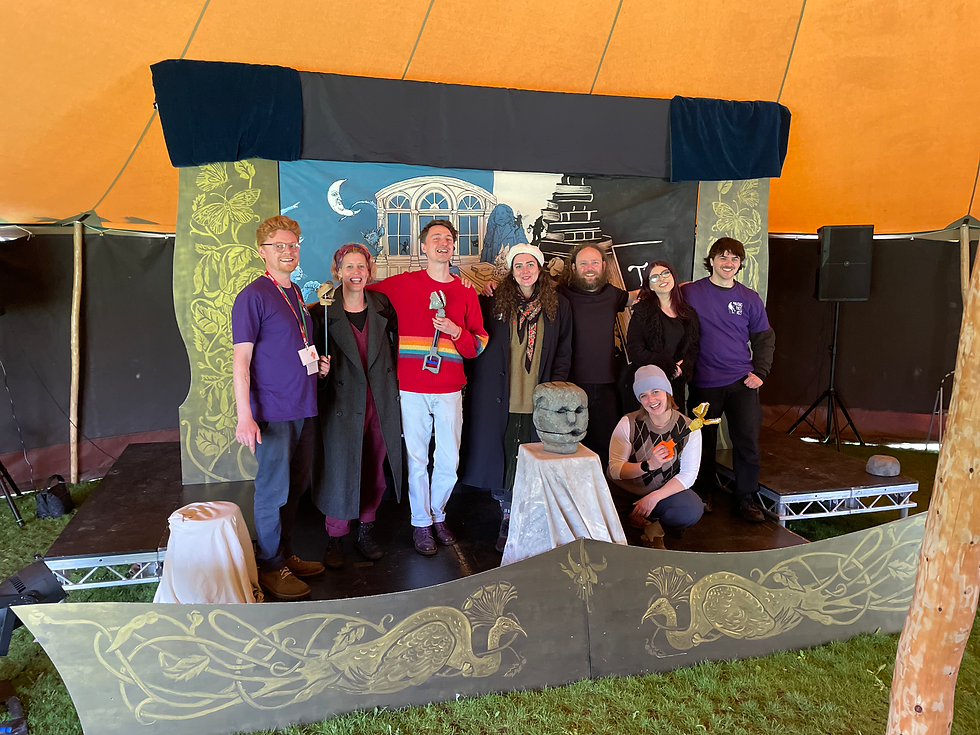
And then there were the rest of the team – Jon-Luke directing, Jude and Grace as my fellow performers on stage and Ruth doing the music. The whole thing came together beautifully, though it did give me a lot of respect for just how hard actors have to work to make a show come together on stage. The crankie itself was temperamental, as any pretty much experimental mechanical machine is going to be, but that was I think part of the joy of the whole thing.
And watching from the stage and seeing an audience of children and adults rapt, watching this performance which is made from the ground up by human hands and minds, entirely hand crafted, hand powered and hand painted was just wonderful. As was watching them go away a little bit more awake to the idea that under the earth of the North, there is treasure and magic in abundance.


Comments